Beyond Virtualization: Why Microsoft Azure Local Leads in Gartner Magic Quadrants
Beyond Virtualization: Why Microsoft Azure Local Leads in Gartner Magic Quadrants
Date: 2026-09-16
Microsoft’s Azure Local redefines infrastructure, blending classic virtualization with cloud-native innovation to lead Gartner’s Magic Quadrants for Server Virtualization and Distributed Hybrid Infrastructure.
Tags: ["Azure", "Azure Local", "Hybrid Cloud", "Gartner", "Microsoft", "Virtualization", "Sovereign Cloud"]
Organizations today face a shifting landscape in infrastructure needs. Traditional virtualization remains a stable bedrock, but the modern enterprise demands far more: hybrid cloud operations, edge computing, local AI capabilities, and compliance with digital sovereignty regulations. Navigating these demands requires platforms far beyond classic hypervisor-centric solutions.
This challenge is at the core of Microsoft’s evolution with Azure Local. Building on the mature Hyper-V virtualization foundation, Azure Local extends capabilities into hybrid and edge environments with container support, integrated Azure services, consistent management APIs, and secure governance—all deployable on customer-controlled infrastructure. This positions Microsoft not just as a virtualization vendor, but as a leader in distributed and sovereign cloud infrastructure.
In this post, we’ll explore why Microsoft and Azure Local stand out as leaders in two pivotal Gartner Magic Quadrants for 2026: Server Virtualization Platforms and Distributed Hybrid Infrastructure. We’ll examine the architectural strengths, technical innovations, and real-world factors making Microsoft’s approach so compelling for modern enterprises.
Architecture Overview
This architecture illustrates how Azure Local integrates on-premises virtualization with Azure’s cloud-native technologies and management plane. It supports a continuum from traditional VM workloads to modern containerized and AI-driven applications, all consistent across cloud, datacenter, and edge.
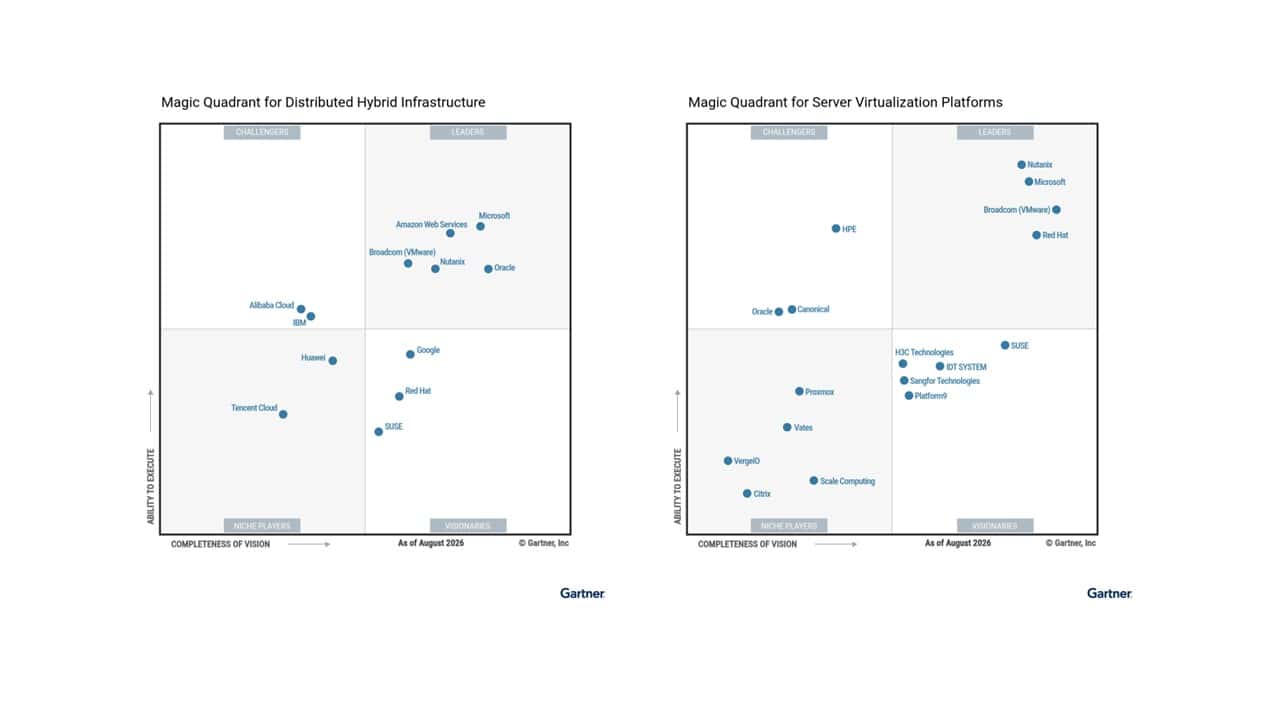
Microsoft and Azure Local recognized as leader — Source: Thomas Maurer
Key Technical Observations
-
Beyond Traditional Hypervisor Capability — While Hyper-V remains the proven virtualization core, Azure Local extends support beyond VMs to containers and selected Azure services running locally, bridging legacy workloads with cloud-native innovation.
-
Unified Management Across Hybrid Environments — Azure Local uses consistent Azure APIs and tools for provisioning, lifecycle management, security, and governance across datacenters, edge, and disconnected scenarios, reducing operational complexity.
-
Validated Hardware & Flexible Deployment Models — Customers can choose from multiple validated hardware platforms and infrastructure designs (hyperconverged or disaggregated), essential for performance and compliance in regulated or sovereign environments.
-
Support for Sovereign & Intermittently Connected Scenarios — Azure Local addresses the needs of sovereign private clouds and edge deployments where intermittent connectivity or data control regulations require localized processing and governance.
-
Azure Arc Integration Centralizes Control — The combination of Azure Local with Azure Arc provides consistent management and visibility across multicloud and distributed infrastructure footprints, key for hybrid cloud strategies.
-
Recognized for Execution & Innovation — Gartner’s placement of Microsoft highest for Ability to Execute in Distributed Hybrid Infrastructure reflects a mature, well-architected approach blending operations, innovation, and regulatory requirements.
How It Works: A Deep Dive into Azure Local's Hybrid Infrastructure
1. Modernizing Virtualized Workloads Seamlessly
Azure Local enables organizations to migrate existing VM-based applications to a cloud-aligned infrastructure without immediate redesign. Leveraging Hyper-V’s robust virtualization capabilities, workloads benefit from live migration, virtual networking, and granular resource allocation, now unified with Azure’s operational tools.
2. Running Containers Side by Side with VMs
Azure Local supports Kubernetes-based applications alongside VMs, facilitating hybrid applications that mix containerized microservices with traditional components. This is critical for gradual cloud-native adoption and ensures operational consistency.
3. Utilizing Consistent Azure APIs Across Cloud and Edge
Azure Local exposes Azure’s management, security, and governance capabilities consistently, whether workloads run on-premises, at the edge, or in the cloud. This uniformity simplifies compliance and lifecycle management.
4. Supporting Sovereign & Regulated Environments
Deployments in sovereign private clouds are constrained by strict data sovereignty and connectivity requirements. Azure Local’s design accommodates disconnected or intermittently connected infrastructures that uphold these mandates.
5. Leveraging Azure Arc for Distributed Hybrid Management
Azure Arc extends Azure management to any infrastructure. When combined with Azure Local, it delivers centralized inventory, policy enforcement, and compliance reporting across hybrid and multicloud environments.
Quick Tips & Tricks
-
Modernize Gradually Using Azure Local
Start by running existing VMs on Azure Local to harness cloud benefits without a full application rewrite. -
Combine VMs and Kubernetes for Flexible Workloads
Run container workloads side-by-side with virtual machines to adopt cloud-native architectures incrementally. -
Choose Validated Hardware to Simplify Support
Use Microsoft-validated deployment configurations to ensure compatibility and receive vendor support for your hybrid environment. -
Leverage Azure Arc for Single Pane of Glass Management
Register your Azure Local deployments with Azure Arc to manage diverse environments consistently via Azure Portal or CLI. -
Plan for Disconnected Scenarios in Regulated Industries
Use Azure Local’s capabilities for sovereign and intermittently connected environments to meet compliance without sacrificing innovation. -
Utilize Azure Management APIs for Automation
Automate provisioning and governance with Azure Resource Manager templates and PowerShell/CLI tooling across your hybrid footprint.
Conclusion
Microsoft’s vision with Azure Local transcends traditional virtualization, offering a platform designed for today’s hybrid, edge, AI, and sovereignty demands. By integrating Hyper-V’s trusted technology with Azure's cloud innovation and a flexible distributed architecture, Azure Local positions organizations to modernize seamlessly while embracing future-ready application models.
Microsoft’s recognition in Gartner’s Magic Quadrants for Server Virtualization Platforms and Distributed Hybrid Infrastructure validates their leadership and comprehensive approach. Enterprises can confidently adopt Azure Local to unify management, improve agility, and comply with digital sovereignty — a true evolution beyond the hypervisor.
As hybrid cloud complexity grows, Azure Local’s blend of legacy support, cloud-native enablement, and sovereignty capabilities marks a critical milestone in infrastructure innovation.
References
- Beyond Virtualization: Why Microsoft and Azure Local Stands Out as a leader in Two Gartner Magic Quadrants - Thomas Maurer — Original article analyzing Microsoft’s Gartner recognition and Azure Local capabilities.